About the Workshop

Background

Digital humanities has a long—and often overlooked—history in African studies, from early databases such as the Transatlantic Slave Trade Database, to more recent projects like the African Ajami Library, Open Restitution Africa, and Archivi.ng. AI tools, particularly large language models, add new possibilities for textual analysis and cross-cultural research.

But implementation raises difficult questions. Decisions about what gets digitised, how it is catalogued and who controls access are not neutral; they often favour institutions that already have resources in place. Most AI systems still underperform on African languages. And the pace of adoption frequently outstrips attention to long-term preservation and local capacity.

Critics have described some digital initiatives as a form of "digital saviour complex," where Northern-led projects reproduce colonial dynamics even while claiming to democratise access. This workshop takes these critiques seriously.

Format

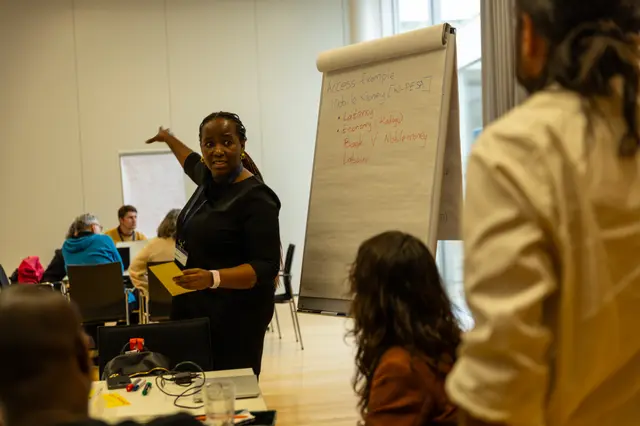
This is not a traditional conference. There are no paper presentations. Instead, participants work intensively across three days in structured sessions designed to produce tangible outputs. Daily synthesis sessions connect insights across the three work streams, feeding directly into the position paper.

Methodological Integration & Digital Preservation

Adapting AI for African languages and establishing sustainable digital preservation models. Participants will document existing computational methods and infrastructure barriers, then develop technical standards and protocols suited to resource-constrained settings.

Equitable Collaboration

Designing partnership models that address power imbalances in North-South and South-South research relationships. This stream will develop mechanisms for resource sharing and intra-continental collaboration, with African epistemologies at the centre.

Ethical Frameworks & Digital Sovereignty

Developing frameworks for ethical AI implementation that protect digital sovereignty and promote equitable scholarly exchange. Standards will emphasise community engagement beyond consultation to true co-creation.

Key Outcome: The Position Paper

The primary goal of this workshop is to produce a jointly authored position paper.

Drawing on insights from the daily sessions, this document will provide a strategic reference point for the field, offering actionable recommendations for research funders, academic institutions, technology developers, and policymakers.

By addressing sustainable funding models, ethical protocols, and decolonised curricula, our aim is to support the consolidation of this emerging field and inform its future direction.

Co-Organisers

Frédérick Madore

Frédérick Madore

University of Bayreuth

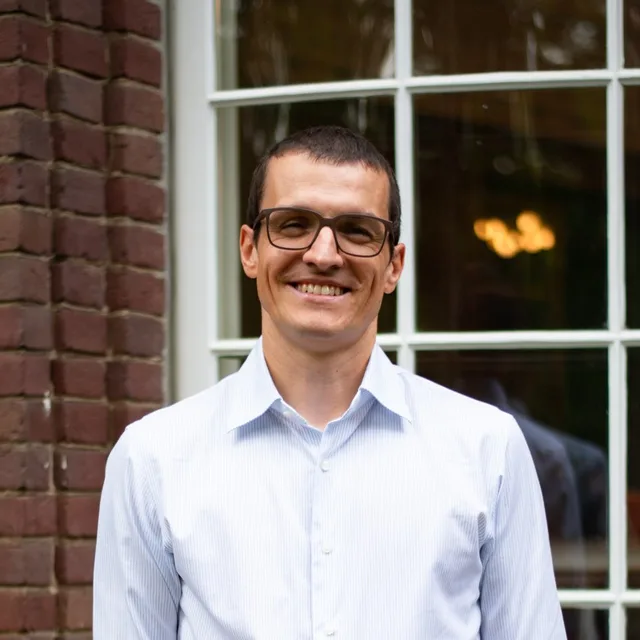
Frédérick Madore is a historian of Islam in Francophone West Africa and a Data Curator at the Cluster of Excellence "Africa Multiple," University of Bayreuth. His current work explores how AI and digital methods can transform the study of under-resourced African digital collections. He is developing the Islam West Africa Collection (IWAC), an open-access database of over 14,500 documents built on Omeka S. Using LLM-powered pipelines, he experiments with AI-assisted text extraction, named entity recognition, and sentiment analysis to process large documentary collections—while critically examining the risks of algorithmic opacity and Western-centric bias. He was previously a Research Fellow at Leibniz-Zentrum Moderner Orient (Berlin).
Research Regions

Benin
Burkina Faso
Côte d'Ivoire
Togo
West Africa
Vincent Hiribarren

Vincent Hiribarren

King's College London

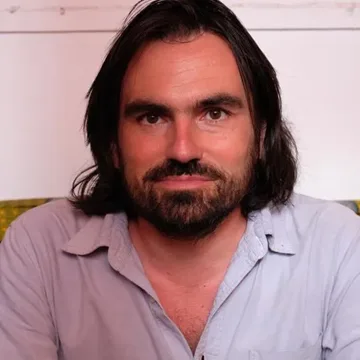
Vincent Hiribarren is a historian of West Africa and has worked on several digitisation programmes on the African continent. He has recently created an undergraduate module on Digital History and is interested in the relationship between African Studies, Digital Humanities and AI.

Research Regions

Cameroon
Nigeria
West Africa

Student Assistants

Calum Houston

Calum Houston

Leibniz-Zentrum Moderner Orient

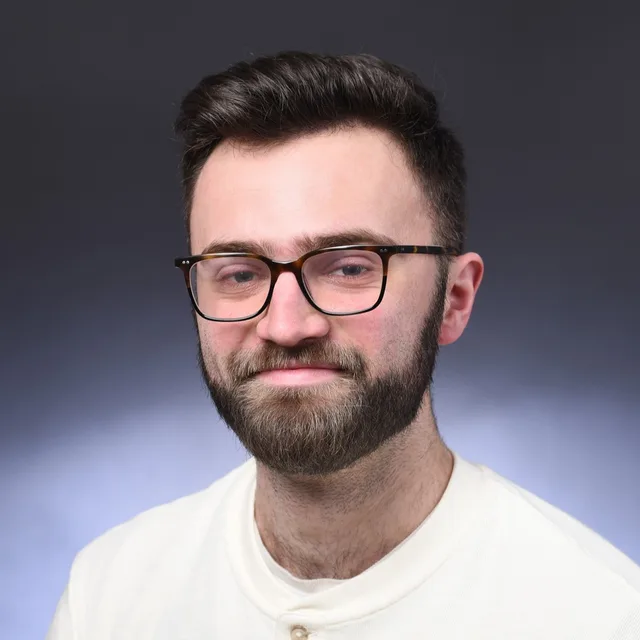
Calum Houston is a researcher and humanitarian practitioner whose work combines academic inquiry and field-based engagement across the Middle East. His interests center on conflict studies and the lived realities of political change, with a particular focus on The Levant and the broader MENA region. He is driven by a broader interest in how communities navigate crisis, displacement, and the politics of humanitarian response.

Research Regions

Lebanon
Syria
Türkiye
Eline Marie Langbo Holm

Eline Marie Langbo Holm

Leibniz-Zentrum Moderner Orient

Eline Marie Holm is a Master of International Affairs candidate at the Hertie School in Berlin, specialising in International Security. Her research interests lie at the intersection of diplomacy, intercultural knowledge, and digital transformation, with experience at her Student Assistant job at Zentrum Moderner Orient (ZMO), where she published on ethical AI in Islamic Law from a cross-cultural perspective. Eline is passionate about intercultural dialogue and the role of intellectual culture in shaping international relations and foreign policy.

Research Regions

MENA
Western Europe

Funding

This scoping workshop is made possible by the generous support of the Volkswagen Foundation.