Organisateurs

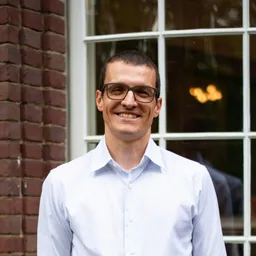
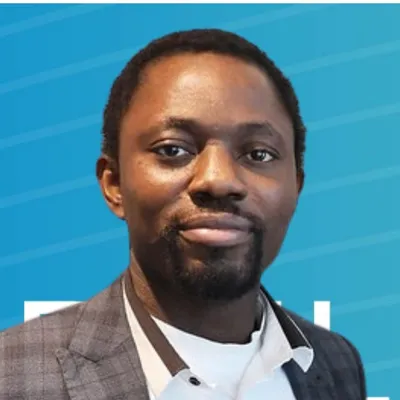
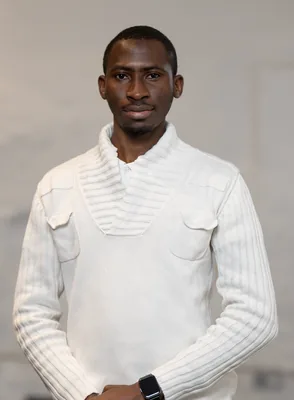
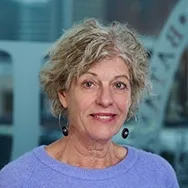
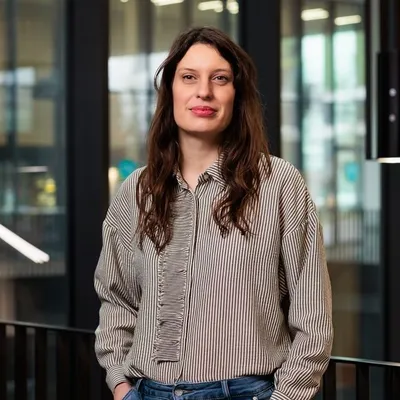
Frédérick Madore

Frédérick Madore

Organisateur

Université de Bayreuth

Frédérick Madore est historien de l'islam en Afrique de l'Ouest francophone et Data Curator au sein du Cluster d'excellence « Africa Multiple » de l'Université de Bayreuth. Ses travaux actuels explorent comment l'IA et les méthodes numériques peuvent transformer l'étude de collections numériques africaines sous-dotées. Il développe l'Islam West Africa Collection (IWAC), une base de données en accès ouvert de plus de 14 500 documents construite sur Omeka S. À l'aide de pipelines alimentés par des LLM, il expérimente l'extraction de texte assistée par l'IA, la reconnaissance d'entités nommées et l'analyse de sentiments pour traiter de vastes collections documentaires — tout en examinant de manière critique les risques d'opacité algorithmique et de biais occidentalo-centrés. Il a été précédemment chercheur au Leibniz-Zentrum Moderner Orient (Berlin).

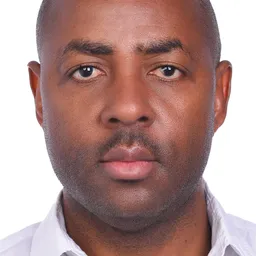
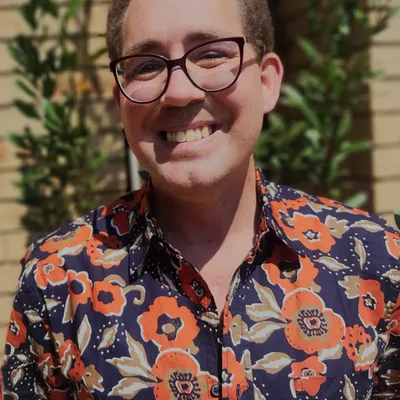
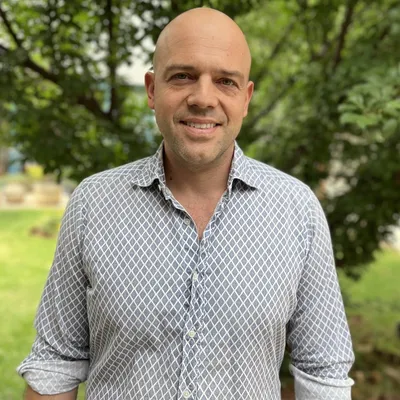
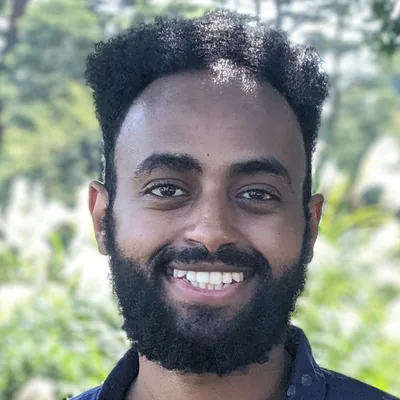
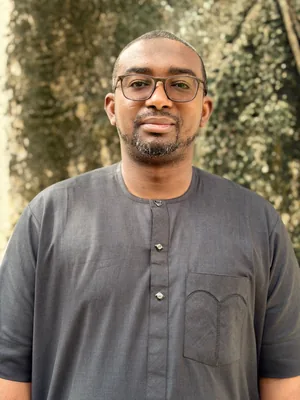
Vincent Hiribarren

Vincent Hiribarren

Organisateur

King's College London

Vincent Hiribarren est historien de l'Afrique de l'Ouest et a travaillé sur plusieurs programmes de numérisation sur le continent africain. Il a récemment créé un module de licence en histoire numérique et s'intéresse aux relations entre les études africaines, les humanités numériques et l'IA.

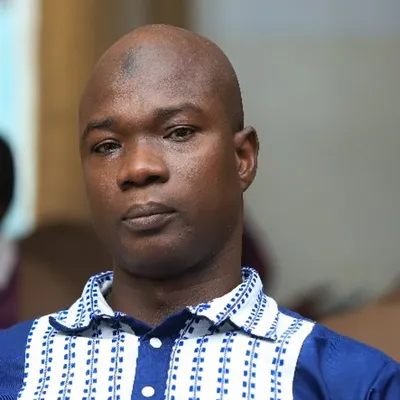
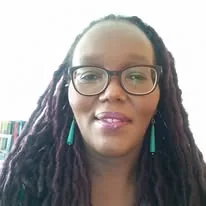
Emmanuel Ngue Um

Emmanuel Ngue Um

Organisateur

Université de Yaoundé 1

Emmanuel Ngue Um est maître de conférences en langues et linguistique africaines à l'Université de Yaoundé 1. Ses recherches actuelles portent sur le développement de technologies vocales et de services de traduction automatique pour soutenir l'enseignement et la revitalisation des langues autochtones d'Afrique. Il participe également au développement d'un écomusée visant à préserver et promouvoir un tronçon du chemin de fer colonial au Cameroun.

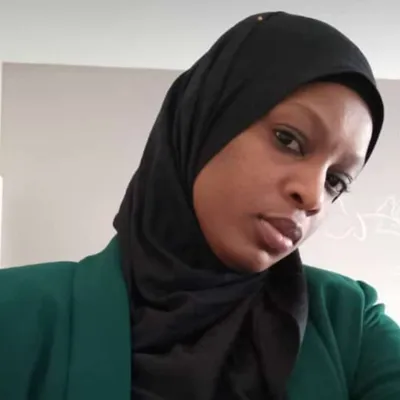
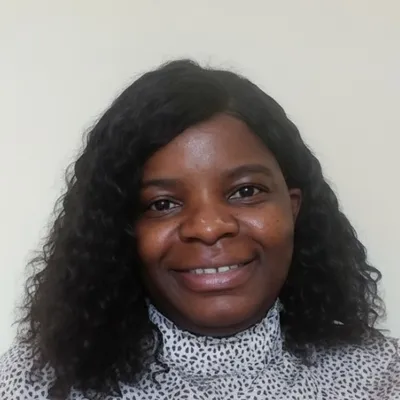
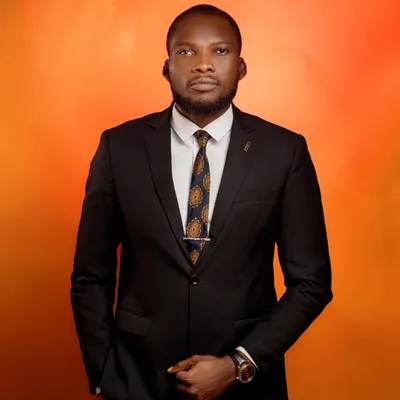
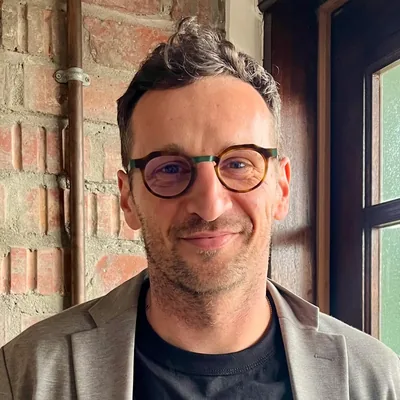
Menno van Zaanen

Menno van Zaanen

Organisateur

Centre sud-africain pour les ressources linguistiques numériques (SADiLaR)

Menno van Zaanen est professeur en humanités numériques au South African Centre for Digital Language Resources. Il s'intéresse particulièrement à l'intégration des techniques computationnelles dans le domaine des humanités. Sa formation de recherche est en informatique et en linguistique computationnelle.

Participant·es

32 sur 32
Aminata Kane

Aminata Kane

« Les manuscrits ajami à l’ère de l’intelligence artificielle : enjeux épistémiques, infrastructures numériques et savoirs africains »

Université Cheikh Anta Diop de Dakar

Aminata Kane est enseignante-chercheure en Sciences de l’Information et de la Communication à l’EBAD de l’Université Cheikh Anta Diop de Dakar (Sénégal). Titulaire d’un doctorat en Sciences de l’Information de l’Université de Lille (France), elle est membre du laboratoire LARSIC-EBAD et membre associée des laboratoires GIRCI-UCAD et GERiiCO de l’Université de Lille. Ses travaux de recherche s’inscrivent au croisement de l’archivistique, de l’organisation des connaissances et des enjeux épistémologiques, éthiques et sociotechniques liés à la production, à la médiation et à la circulation des savoirs. Elle s’intéresse particulièrement à l’épistémologie de l’archivistique, aux archives et aux émotions, aux voix dissonantes et aux silences archivistiques, aux processus de périphérisation des savoirs et du patrimoine matériel et immatériel, ainsi qu’à l’éthique de l’organisation des connaissances et aux dynamiques de patrimonialisation. Ses recherches interrogent également les biais discursifs et les rapports de pouvoir à l’œuvre dans les dispositifs de description, de classification et de valorisation des savoirs. Elles s’intéressent plus largement aux questions de justice épistémique, de décolonisation des savoirs et aux transformations induites par le numérique et l’intelligence artificielle dans les professions de l’information.

BT

Benito Trollip

“Preserving Linguistic Memory through FAIR Practices: Lessons from SADiLaR and Ibali”

Centre sud-africain pour les ressources linguistiques numériques (SADiLaR)

Benito Trollip is a Digital Humanities researcher, specialising in Afrikaans, at the South African Centre for Digital Language Resources (SADiLaR). He completed his PhD in 2022 in which he described morphological evaluative constructions in Afrikaans based on usage data in a written corpus of Afrikaans. Besides his background in Afrikaans linguistics, he is also passionate about open science and data management. His role at SADiLaR also involves presenting data management workshops and managing resource submissions to the SADiLaR repository.

Christine Mataranyika

Christine Mataranyika

“Electronic Theses and Dissertations (ETDs), Citation Practices, and the Empirical Measurement of Knowledge Decolonisation: A Computational Approach”

Université du Witwatersrand

Christine Mataranyika recently completed her MSc in Artificial Intelligence at the University of the Witwatersrand. Her research interests include machine learning, natural language processing, multimodal AI, trustworthy AI, and the broader challenges of building safe and socially beneficial intelligent systems.

Eliette Ngo Tjomb Assembe

Eliette Ngo Tjomb Assembe

« Traduire sans équivalence : enjeux épistémologiques du transfert linguistique dans un système de traduction automatique à base de règles pour la paire français-ewondo »

Université de Yaoundé 1

Eliette Ngo Tjomb Assembé est chercheure en technologies du langage, traductrice et spécialiste de la communication des organisations. Elle prépare actuellement une thèse de doctorat au Département des Sciences du langage de l’Université de Yaoundé I, intitulée : « Développement d’une paire de traduction automatique français-ewondo dans Apertium ». Sa recherche doctorale mobilise les principes de la grammaire fonctionnelle systémique afin d’explorer la formalisation des structures linguistiques nécessaires au développement de systèmes de traduction automatique pour des langues à faibles ressources. Cette démarche articule description linguistique, modélisation grammaticale et ingénierie linguistique dans une perspective de développement de ressources numériques pour les langues africaines. Elle contribue également à plusieurs initiatives de collecte, d’annotation et de structuration de données linguistiques et vocales pour les langues africaines. Ses travaux sur l’annotation portent notamment sur la constitution et l’enrichissement de ressources linguistiques ouvertes nécessaires à l’entraînement et à l’évaluation des systèmes de traitement automatique des langues. Elle a participé à des projets multilingues de collecte de données vocales couvrant plusieurs dizaines de langues africaines et contribue au développement d’outils et de ressources open source pour les technologies linguistiques.

Evelyne Amana

Evelyne Amana

« Recherche en sciences sociales et pérennisation des langues africaines à l’ère du numérique »

Université de Yaoundé I

Evelyne Amana est enseignante-chercheure en service à l’École normale supérieure, Université de Yaoundé I — première femme psychologue à accéder au grade de Professeure Titulaire au Cameroun. Elle est titulaire d’un Doctorat Ph.D en Psychologie de l’Enfant. Présidente des Femmes-Chercheures et Enseignantes-Chercheures du Cameroun (AFEMC-CAM), elle s’intéresse à l’enfant et l’adolescent dans leur niche développementale, à la culture comme facteur de développement et à l’influence du numérique sur le développement. Elle est auteure de 27 articles publiés seule ou en collaboration, dont deux collaborations internationales, et directrice d’un ouvrage collectif publié en 2024.

Falimatou Pemgbou

Falimatou Pemgbou

« L’émotion par le non-dit : pour une stratégie d’annotation des émotions chez le personnage de Ramatoulaye dans Une si longue lettre de Mariama Bâ »

Université d’Ebolowa

Falimatou Pemgbou est docteure en littérature comparée de l’Université de Yaoundé 1. Ses recherches portent sur la paralittérature, et plus particulièrement sur le roman policier, un genre qu’elle aime qualifier de « roman du crime ». Assistante à l’Université d’Ebolowa, elle y enseigne la littérature française, la littérature du Nord et la médiation de la littérature au sein du Département des littératures, des cultures régionales et du métier du livre, ainsi que la littérature francophone d’Amérique et la critique littéraire au Département des langues officielles et traduction. Elle est membre de l’Atelier de Critique et d’Esthétique Littéraires (ACEL) et auteure de trois articles scientifiques.

FL

Friederike Lüpke

“AI for the ‘Alphabet without borders’: Piloting generative AI for adaptive multilingual literacy materials in the LILIEMA programme in Senegal”

Université d’Helsinki

Friederike Lüpke is a linguistic anthropologist and sociolinguist at the University of Helsinki. Her research focuses on multilingualism, literacy practices, and language ecologies in West Africa, with long-term fieldwork in Senegal. Her joint research with Jules Mansaly examines how rural speakers of small, locally confined languages engage with AI and digital technologies, and how existing tools can be adapted to serve multilingual communities at the margins of the digital language divide.

Hammed Olalekan Lawal

Hammed Olalekan Lawal

“Re-coding the Yorùbá Epistemologies in the Era of Artificial Intelligence: A Relational Ethnography of AI-Generated Videos of Ìtàn Ìjàpá, its Creator and Viewers on Facebook and TikTok”

Université de Bayreuth

Hammed Olalekan Lawal, a Nigerian, is a doctoral researcher and BIGSAS Junior Fellow at the University of Bayreuth. His interests include relationality and network research, and the impact of digital technologies on education and training. His ongoing doctoral research is supervised by Professor Dr. Iris Clemens, the Chair of Deutsche Network Research and Educational Science at the University of Bayreuth.

Iginio Gagliardone

Iginio Gagliardone

“Electronic Theses and Dissertations (ETDs), Citation Practices, and the Empirical Measurement of Knowledge Decolonisation: A Computational Approach”

Université du Witwatersrand

Iginio Gagliardone is the inaugural SA-UK Bilateral SARChI Chair in the Digital Humanities at Wits University. He is the author of “China, Africa, and the Future of the Internet” (2019), “The Politics of Technology in Africa” (2016), and “Countering Online Hate Speech” (2015). His most recent work examines the international politics of Artificial Intelligence and the emergence of new imageries of technological evolution in Africa and in the Global South.

John Oluwafemi Daniel

John Oluwafemi Daniel

“Digital Humanities and the “Town Question” in Nigerian History: Accessibility, Co-Production, and Sustainable Infrastructures from a Nigerian Perspective”

Université d’Ibadan

John Oluwafemi Daniel holds a B.A. and M.A. in History and International Studies from the University of Ilorin, Nigeria. He is currently a doctoral student in the Department of History at the University of Ibadan. His research focuses on digital archives and Digital Humanities practices, using digitised archival records on Ekiti Division in colonial Nigeria as a case study. His work explores issues of access, infrastructure, and community engagement in African historical scholarship. He is a recipient of the 2025 Digital Humanities PhD Scholarship awarded by the French Institute for Research in Africa–Nigeria (IFRA-Nigeria), which supports his ongoing doctoral research.

JM

Jules Mansaly

“AI for the ‘Alphabet without borders’: Piloting generative AI for adaptive multilingual literacy materials in the LILIEMA programme in Senegal”

Université de Gambie

Jules Mansaly is a sociolinguist and president of LILIEMA based at the University of the Gambia. His joint research with Friederike Lüpke examines how rural speakers of small, locally confined languages engage with AI and digital technologies, and how existing tools can be adapted to serve multilingual communities at the margins of the digital language divide.

Karabo Mohapeloa

Karabo Mohapeloa

“Electronic Theses and Dissertations (ETDs), Citation Practices, and the Empirical Measurement of Knowledge Decolonisation: A Computational Approach”

Université du Witwatersrand

Karabo Mohapeloa is pursuing an MSc in Computer Science at the University of the Witwatersrand. His research interests include reinforcement learning, natural language processing, topic modelling, digital humanities, and the study of computational approaches to analyzing complex socio-political discourse, with a particular focus on controversy mapping.

Khaoula Stiti

Khaoula Stiti

“Before the Algorithm: Decolonial Computing as a Methodological Prerequisite for AI-Assisted Heritage Research in Africa”

Chercheuse indépendante

Khaoula Stiti is an architect trained at the National School of Architecture in Tunis (2016) and holding a doctorate from the Université libre de Bruxelles (2024). Her work sits at the intersection of heritage studies, participatory methodologies, decolonial computing, and the politics of knowledge production in North–South research partnerships. Her doctoral research examined heritage management in Tunisia through the P@trimonia 2.0 project, a North–South collaboration developing a heritage participatory platform. Her current work interrogates the political and epistemological conditions under which digital technologies shape what counts as knowledge and heritage in Global South contexts.

LC

Lauren Coetzee

“Beyond the Readable Archive: Historical Codebooks, Large Language Models, and the Precolonial African Bead Trade, 1500–1900”

Université du Luxembourg

Lauren Coetzee is a doctoral researcher at the Centre for Contemporary and Digital History (C²DH), University of Luxembourg, where she works on dynamic economic and social institutions in pre-colonial Africa (1500–1900). She holds an MA from Stellenbosch University and works within the Time Traveller Project. Her research integrates LLMs, GIS, and quantitative methods to analyse African trade networks from European traveller accounts. She teaches digital and computational methods in the Humanities, and is a member of the African Economic History Network, the Digital Humanities Association of Southern Africa, and the Economic History Society, and founder of the Colonial Digital History Network.

Leonard Kibet Kirui

Leonard Kibet Kirui

“Frugal Infrastructures and South-South Ecologies for Sustainable Digital Research in African Humanities”

Université Moi

Leonard Kibet Kirui serves as a Database Administrator in the ICT Directorate/Projects Office at Moi University, Kenya, where he supports the Moi University–Africa Multiple Research Centre (AMRC) on ICT–Digital Research Component. He also lectures part-time at the Department of Information Technology and Computing, Moi University. His research focuses on the Semantic Web and linked data. Kirui holds a PhD in Information Technology (Kibabii University, Kenya), an MSc in Information Technology (Moi University), and a BSc in Information Sciences. A member of ACPK, ISOC, and ACM, he bridges practical ICT infrastructure with academic innovation to advance sustainable digital research capacity.

LK

Lydia Kila Taban

“From Data to Impact: A 4D Framework for Scaling Language AI Across African Languages”

Masakhane

Lydia Kila Taban is the Community Manager at Masakhane. Her work at Masakhane focuses on bolstering NLP communities in Africa by supporting collaboration towards the creation of African Language Datasets, Benchmarks, and Models, as well as fostering a resilient and inclusive open-source community. Lydia formerly led on Technology at UNICEF on the Oky project. With a background in Software Engineering, Community Management, and Data Science, she is at the confluence of collaborative homegrown solutions, for Africa, by Africans. She has also worked on Digital Data Collection and Analysis pipelines in the Humanitarian context in South Sudan with stakeholders including the World Bank and UN Women. Lydia holds a Bachelor of Science in Applied Computer Technology (conc. Mobile Distributed Systems Eng.) from The United States International University-Africa.

Max Milella

Max Milella

“Electronic Theses and Dissertations (ETDs), Citation Practices, and the Empirical Measurement of Knowledge Decolonisation: A Computational Approach”

Université du Witwatersrand

Max Milella is completing his Masters in e-Science (Data Science and the Humanities) at the University of the Witwatersrand. His research is on computational approaches to traditional discourse analysis, and he is currently applying it to examine how Nelson Mandela has historically been invoked symbolically in South Africa’s parliamentary discourses.

MK

Mohamadou Konaté

« L’IA générique face aux réalités africaines : défis structurels et voies alternatives pour la recherche en cybersécurité au Burkina Faso »

Université Joseph Ki-Zerbo

Mohamadou Konaté est chercheur indépendant et chargé de l’Environnement de Recherche Digitale au Cluster d’excellence « Africa Multiple » de l’Université Joseph Ki-Zerbo, basé à Ouagadougou, Burkina Faso. Titulaire d’un Master, il prépare une thèse sur la conception de méthodes et d’algorithmes d’évaluation de la cybersécurité des infrastructures critiques par l’IA. Ses travaux visent à améliorer la résilience cyber des systèmes nationaux burkinabè en développant des approches adaptées aux contraintes locales. Il s’intéresse également aux conditions d’une recherche africaine en IA équitable et contextuellement valide, notamment à la question des données africaines absentes des benchmarks internationaux de cybersécurité.

Oreen Yousuf

Oreen Yousuf

“Building NLP/HTR Infrastructure for Ajami Manuscripts”

Université d’Uppsala

Oreen Yousuf is a PhD student in natural language processing at Uppsala University, Sweden. His focus is on NLP for low-resource languages, particularly for Ajami manuscripts/languages. Outside of his PhD he works on various language technology projects with a focus on African languages, such as machine translation. He is also an associate researcher for Unicode, specializing in African scripts.

Rachel Maina

Rachel Maina

“Designing Multimodal CALL for African Languages: Pedagogical Innovation Under Infrastructural Constraint”

Université du Wisconsin–Madison

Rachel Maina is a PhD candidate in African Cultural Studies at the University of Wisconsin–Madison, with a minor in Anthropology. Her research examines how Swahili-Chinese identities are constructed along the Kenyan coast, drawing on oral history, ethnographic methods, and comparative literary analysis. She is also developing work at the intersection of language pedagogy and technology, focusing on multimodal approaches to computer-assisted language learning (CALL) for African languages. Her forthcoming chapter in the edited volume A Handbook of African CALL advances this work. Her broader interests include African cultural and linguistic contexts, language pedagogies, and equitable language technologies. She has taught Kiswahili language and literature, as well as African culture, at multiple levels and previously held academic positions in Kenya.

Sanjin Muftić

Sanjin Muftić

“Preserving Linguistic Memory through FAIR Practices: Lessons from SADiLaR and Ibali”

“Enriching the Invisible: AI-Assisted Metadata Generation and the Findability of Southern African Heritage Collections”

Bibliothèques de l’Université du Cap

Sanjin Muftić is a Digital Scholarship Specialist at the University of Cape Town Libraries, working at the intersection of digital humanities, data curation, and research infrastructure. His work focuses on designing metadata frameworks, developing digital collections platforms using Omeka S, and supporting interdisciplinary research through scalable, structured data systems. He has led large-scale digital collection migrations and the development of UCT’s Ibali platform, supporting tens of thousands of digital objects and users. His interests include digital archives, linked data, and the ethical stewardship and accessibility of cultural heritage materials.

Sarah Oberbichler

Sarah Oberbichler

“Sustainable and Responsible AI Workflows in History from a Global Perspective”

Université du Luxembourg

Sarah Oberbichler is Assistant Professor of Artificial Intelligence and Data Mining in Digital History at the Centre for Contemporary and Digital History (C²DH) of the University of Luxembourg. Her interdisciplinary research lies at the intersection of environmental studies, transnational media studies, historical migration studies, NLP, and (critical) AI studies.

Tajuddeen Gwadabe

Tajuddeen Gwadabe

“From Data to Impact: A 4D Framework for Scaling Language AI Across African Languages”

Masakhane

Tajuddeen Gwadabe is the Programs and Monitoring, Evaluation, and Learning (MEL) Lead at the Masakhane African Languages Hub, where he oversees the design and implementation of large-scale initiatives advancing inclusive AI for African languages. He holds a PhD in Computer Science and Technology from the Chinese Academy of Sciences, with a research focus on data mining and high-performance computing. His work sits at the intersection of natural language processing, program management, and impact evaluation, with a particular interest in translating AI research into real-world applications across domains such as health, agriculture, and education. He is affiliated with the Masakhane Research Foundation.

Soutenu par

Point SudSTIAS — Stellenbosch Institute for Advanced StudyDeutsche Forschungsgemeinschaft (DFG)Goethe University FrankfurtUniversity of Bayreuth / Africa MultipleKing's College LondonSADiLaR

© 2026 Frédérick Madore, Vincent Hiribarren, Emmanuel Ngue Um, Menno van Zaanen. Tous droits réservés.